Blog

  • Singapore Leads CSAO Crypto Market with $284B in Activity, Chainalysis Reports

    Singapore Leads CSAO Crypto Market with $284B in Activity, Chainalysis Reports

    2nd October 2026

    By Shubhii Verma

    Singapore has emerged as the largest crypto economy in Central and Southeast Asia and Oceania (CSAO), recording $284 billion in crypto activity between July 2025 and June 2026, according to Chainalysis’ 2026 Geography of Crypto Report.

    The region’s overall crypto economy contracted 6.8% during the period, but the decline concealed growth in several markets and use cases. Singapore and Australia recorded stronger institutional activity, while the Philippines, Thailand, and Vietnam saw notable growth in peer-to-peer (P2P) transfers.

    Singapore Leads CSAO with $284 Billion in Crypto Activity

    Singapore’s crypto activity increased 55.4% year-over-year, with institutional-platform activity rising 94% to $60 billion. Centralized exchange flows increased 30%, while decentralized exchange flows climbed 69%. Chainalysis attributed much of the institutional activity to market makers, over-the-counter trading firms, and institutional brokerages.

    Australia ranked second regionally with $173.1 billion in activity, although its overall crypto economy declined 5.6%. Institutional-platform activity nevertheless grew 33.3% to $39.92 billion, supported by custodians, OTC desks, and market-making firms.

    India ranked third with $135 billion in crypto activity despite a 14.7% contraction. Its centralized exchange market remained the largest in CSAO, with India-based users receiving $88.4 billion in CEX inflows during the reporting period.

    Stablecoins Drive Cross-Border Payments Across CSAO

    Stablecoins have also become an important tool across the region, particularly for cross-border payments. Chainalysis found that cross-border stablecoin activity exceeded domestic activity in every market analyzed. Across CSAO, cross-border activity was 3.2 times larger than domestic activity, while Malaysia recorded the widest gap at 29.5 times.

    In the Philippines, stablecoins are increasingly being used for remittances. Industry estimates cited by Chainalysis suggest that around 5% to 10% of inbound remittances are being settled using stablecoins.

    P2P Crypto Transfers Grow in the Philippines, Thailand, and Vietnam

    P2P activity was another major growth area. The Philippines, Thailand, and Vietnam recorded 5.4 million small-value P2P transfers below $10,000, representing 14.4% of the global total despite the three countries accounting for only 2.5% of the global crypto economy. More than four in five domestic transfers were below $1,000.

    Institutional Adoption and Regulation Shape Regional Growth

    Institutional adoption is expanding across CSAO. Institutional platforms processed $152.3 billion during the reporting period, up 40% year-over-year, with such platforms accounting for 18.9% of regional service activity by the end of the second quarter.

    Chainalysis said regulation and infrastructure will be important for the region’s next stage of adoption. Singapore’s regulated digital payment token and stablecoin frameworks have helped support institutional participation, while Australia is developing licensing and compliance frameworks for digital asset platforms.

    The broader trend suggests that crypto use in CSAO is increasingly moving beyond trading toward cross-border settlement, tokenisation, treasury management, and other practical financial applications.

  • Opinion: Interest Ban. Wind-Down Plans. Multi-Jurisdictional Issuance. Singapore Has Published the Most Comprehensive Stablecoin Legislation in APAC.

    Opinion: Interest Ban. Wind-Down Plans. Multi-Jurisdictional Issuance. Singapore Has Published the Most Comprehensive Stablecoin Legislation in APAC.

    28th September 2026

    By Cyrus Tong

    On September 1, 2026, the Monetary Authority of Singapore published consultation paper P015-2026, a set of proposed amendments to the Payment Services Act 2019 that would give legal force to Singapore’s Single-Currency Stablecoin framework for the first time.

    This is not a new policy announcement. 

    The MAS-SCS framework was finalised in August 2023. 

    What September 1 represents is something more consequential: 

    The translation of three years of regulatory policy into enforceable statutory law, with a protected designation, a new licence class, and four significant new policy proposals that respond directly to international regulatory developments since 2023.

    The consultation closes October 16, 2026.

    For every institution operating in Singapore’s digital payment ecosystem, that deadline is the last formal opportunity to shape legislation that will govern stablecoin issuance in one of Asia’s most strategically important financial centres for years to come. 

    What the Draft Amendments Actually Do

    The consultation package has two distinct components, and understanding the difference between them is essential for compliance planning.

    The first is the legislative implementation of positions MAS already finalised in 2023. 

    These are not new policy choices. 

    They are the statutory form of what was already established in regulatory guidance. 

    The draft amendments introduce statutory definitions of “stablecoin” and “MAS-regulated stablecoin.” 

    They create a new licence class for stablecoin issuance, covering minting, circulation, reserve management, and redemption at par. 

    They require reserve assets to equal at least the par value of all stablecoins in circulation at all times. 

    They mandate redemption in the pegged currency within MAS-prescribed timeframes, and they establish that only licensed issuers may market themselves as “MAS-regulated stablecoin” issuers or describe their tokens using that protected label. 

    Stablecoins that fall outside the framework are not prohibited.

    But they will be reclassified as Digital Payment Tokens and subjected to the existing consumer protection safeguards that apply to DPTs, including measures to assess customer risk awareness, restrictions on trading incentives, prohibitions on credit card payments, and limits on financing and leverage.

    For compliance functions, this binary is immediately operationally significant. 

    The question of whether a stablecoin qualifies for MAS-SCS status or falls into the DPT category determines the entire compliance architecture, the disclosures required, the marketing restrictions that apply, and the regulatory relationship an issuer will have with MAS versus the existing DPT supervisory framework.

    The framework applies to single-currency stablecoins issued in Singapore and pegged to the Singapore dollar or any G10 currency. 

    This scope definition matters for institutions assessing whether products currently in market or in development will require a new MAS licence or can continue under existing payment service authorisations.

    Banks and merchant banks wishing to issue MAS-regulated stablecoins must do so through a separate legal entity, a structural requirement that creates immediate corporate and compliance planning obligations for any institution with existing banking licences seeking to enter the stablecoin issuance market.

    The Four New Policy Proposals and Why They Signal Global Convergence

    The second component of the consultation package is more significant for forward-looking compliance planning. 

    MAS is consulting for the first time on four policy areas that reflect how the global regulatory environment has evolved since 2023.

    The first is multi-jurisdictional issuance. 

    MAS has proposed allowing stablecoins jointly issued by a Singapore-based entity and a foreign issuer to qualify for MAS-SCS status, provided associated risks are adequately mitigated. 

    This is a direct response to the cross-border stablecoin architecture that compliance professionals have been navigating since the GENIUS Act came into force, and it signals Singapore’s recognition that no major stablecoin can be purely domestic in its ambition or its regulatory footprint.

    The second is recognition of foreign-issued stablecoins. 

    MAS is consulting on whether stablecoins regulated under comparable overseas frameworks (MiCA, the GENIUS Act, the UK’s FCA regime) should receive recognition for use in cross-border wholesale transactions in Singapore. 

    The criteria for comparability have not yet been specified, and determining them will be one of the most consequential outcomes of the consultation.

    The third is the interest payment ban. 

    Mirroring both MiCA and the GENIUS Act’s approach, MAS proposes prohibiting interest payments to MAS-regulated stablecoin holders, confirming that Singapore’s regulatory philosophy positions these instruments as payment tools rather than yield-bearing deposits. 

    The fourth is operational resilience. 

    MAS proposes mandatory stress testing, recovery plans, and orderly wind-down requirements for regulated issuers, a direct response to the systemic risk lessons of the 2022-2023 stablecoin failures and a clear signal that Singapore expects its regulated issuers to demonstrate institutional-grade operational governance, not just product compliance.

    MAS has also signalled a selective, risk-based approach to licensing, expecting only a limited number of stablecoins to achieve regulatory approval, with evaluation criteria including financial soundness, operational track record, and business viability. 

    This is not a framework designed to maximise the number of licensed issuers. 

    It is a framework designed to identify the issuers that meet Singapore’s institutional standard.

    My Take

    I have spent over two decades building compliance frameworks in Singapore and across the APAC region. 

    And the September 1 consultation paper is the most significant single regulatory step Singapore has taken in the stablecoin space. 

    Not because it introduces new policy, but because it converts policy into law.

    The distinction matters more than it might appear.

    Regulatory guidance shapes behaviour. 

    Statute governs it. 

    And once the Payment Services Act amendments are enacted, the compliance obligations they create are enforceable, the protected designation has legal meaning, and the consequences of operating outside the framework are clearly defined.

    What strikes me most about this consultation is the timing. 

    It arrives alongside Circle’s $400 million acquisition of Tazapay, a deal awaiting MAS change-of-control approval. 

    Alongside BLOOM, in which Visa, DBS, OCBC, UOB, and eight other institutions are building stablecoin settlement infrastructure under MAS supervision. 

    Alongside Singapore’s first licensed stablecoin issuer, HKDAP and the HSBC product, already in active operation.

    Singapore is not building its stablecoin regulatory architecture in anticipation of a market that might emerge.

    It is building it around a market that is already operating.

    And the institutions that engage with the October 16 consultation, that submit responses, that shape the subsidiary legislation on reserve composition and redemption timeframes, will be the ones whose compliance infrastructure most closely reflects the final framework when it becomes law.

    The window to influence what you will eventually be required to comply with closes in four weeks.

    About the author

    Cyrus Tong, an award-winning compliance expert, is the Group Chief Compliance Officer of DCS Group.


  • How to Buy USDT in Singapore with SGD: A Complete Guide to Buying Tether via PayNow

    How to Buy USDT in Singapore with SGD: A Complete Guide to Buying Tether via PayNow

    25th September 2026

    By Shubhii Verma

    Buying Tether (USDT) in Singapore can be relatively straightforward when using a cryptocurrency platform that supports Singapore dollars (SGD) and local payment methods. For users searching for how to buy USDT in Singapore, the process generally involves creating an account, completing identity verification, depositing SGD, and exchanging the funds for USDT.

    USDT is a stablecoin designed to track the value of the US dollar. Unlike cryptocurrencies such as Bitcoin, which can experience large price movements, USDT is intended to maintain a value close to one U.S. dollar. This makes it useful for moving funds between crypto platforms, holding dollar-denominated digital assets, or accessing blockchain-based services.

    Before buying Tether Singapore, users should check whether the platform they plan to use is authorised to provide digital payment token services in Singapore. The Monetary Authority of Singapore (MAS) Financial Institutions Directory currently lists licensed major payment institutions offering digital payment token services. The directory includes companies such as Coinbase Singapore, Blockchain.com Singapore, Gemini Digital Payments Singapore, and others.

    Choose a Platform

    The first step is selecting an exchange or crypto service that supports USDT/SGD trading or allows users to buy USDT directly using Singapore dollars. Availability, fees, supported networks, withdrawal limits, and payment options can differ between platforms.

    For example, Independent Reserve’s Singapore service currently provides a USDT/SGD market and supports SGD deposits through PayNow and FAST bank transfers. Users should still check the platform’s current terms, fees, and USDT availability before placing an order.

    Create and Verify Your Account

    After selecting a platform, create an account using your personal details. Singapore-based regulated services generally require identity verification and may request information about your source of funds or intended account activity.

    Verification requirements can include identification documents, address information, and additional compliance checks. Completing verification before depositing money can help prevent delays when buying or withdrawing USDT.

    Deposit SGD

    Once the account is verified, deposit Singapore dollars into the platform. Depending on the provider, you may be able to use PayNow or a FAST bank transfer.

    For users specifically searching for USDT PayNow Singapore, PayNow can provide a convenient way to transfer SGD from a participating Singapore bank to a supported crypto platform. Follow the platform’s payment instructions carefully, including any reference number or unique payment details. Do not send money to payment details received through unofficial messages or social media.

    Buy USDT With SGD

    After the SGD deposit arrives, open the trading or buy section and select USDT. Choose SGD as the payment currency, enter the amount you want to spend, review the quoted USDT amount, and check the transaction fee and exchange rate.

    You may encounter either an instant purchase interface or an order book. An instant purchase executes at the quoted price, while an order book allows users to place a market or limit order depending on the platform. The final amount of USDT received can differ because of trading fees, spreads, and market movements.

    Check the Network Before Withdrawal

    If you plan to transfer USDT to another wallet, carefully check which blockchain network the receiving wallet supports. Tether currently supports USDT on several networks, including Ethereum, Polygon, Arbitrum, Plasma, and Tron. Sending USDT through an incompatible network can result in funds becoming inaccessible.

    Copy the receiving wallet address carefully and confirm both the address and network before approving the transaction. Blockchain transfers generally cannot be reversed after confirmation.

    Costs and Risks to Consider

    The cost of buying USDT with SGD can include trading fees, spreads, deposit or withdrawal charges, and blockchain network fees. Compare the complete cost rather than looking only at the displayed USDT price.

    USDT is designed to track the U.S. dollar, but users should not treat it as identical to cash held in a Singapore bank account. Stablecoins involve issuer, platform, operational, regulatory, and blockchain-related risks. Singapore’s regulatory framework also does not mean that every digital token is protected like a bank deposit.

    Security is equally important. Use a strong, unique password, enable available two-factor authentication, and avoid clicking links from unsolicited messages. Never share wallet recovery phrases, private keys, or authentication codes.

    Keep records of purchases, deposits, withdrawals, and fees as well, particularly if you use USDT for business, trading, remittances, or other financial activities in Singapore.

    Final Checklist

    To buy USDT with SGD, choose a platform that legally provides relevant services in Singapore, verify your identity, deposit SGD through an approved payment method such as PayNow or FAST, purchase USDT, and confirm the blockchain network before transferring tokens elsewhere.

    For anyone researching how to buy USDT in Singapore or buy Tether in Singapore, the key is to compare supported payment methods, fees, liquidity, withdrawal options, and regulatory status before committing funds. PayNow can make the SGD funding step convenient, but users should always follow the exchange’s official instructions and verify transaction details before sending money.

  • How to Buy Ethereum in Singapore (2026)

    How to Buy Ethereum in Singapore (2026)

    22nd September 2026

    By Anjali Kochhar

    Singapore’s cryptocurrency landscape is experiencing an unprecedented structural transformation. Driven by institutional validation, widespread retail adoption, and the ubiquity of instant digital payment ecosystems like PayNow, digital payment tokens have solidified their presence in the city-state’s mainstream financial system. This rapid adoption has prompted the Monetary Authority of Singapore (MAS) to enforce a series of rigorous regulatory updates designed to insulate retail investors from market volatility while cementing the nation’s position as a highly transparent digital asset hub.

    Local fiat-to-crypto gateways have reported record-breaking transaction volumes, fueled primarily by the friction-free integration of instant settlement networks. “The ability to instantly convert Singapore Dollars (SGD) into core digital assets like Ethereum (ETH) via PayNow has radically lowered the barrier to entry,” notes a senior market analyst at a prominent local brokerage. “What used to require multi-day bank transfers can now be executed within 60 seconds through a standard mobile banking app. This convenience has drawn an entirely new demographic of casual, retail participants into the ecosystem.”

    The Allure of Instant Settlement

    The explosive growth in trading activity is tightly linked to the integration of local payment infrastructure with MAS-licensed entities. Homegrown firms like Coinhako, alongside international heavyweights operating under Major Payment Institution (MPI) licenses such as OKX Singapore, Independent Reserve, and Coinbase, have embedded Singpass identification and PayNow settlement directly into their user interfaces.

    For the average Singaporean investor, the process has mutated into a routine e-commerce transaction. By scanning a dynamically generated QR code through banking applications like DBS digibank, OCBC Digital, or UOB TMRW, capital is transferred into digital wallets with unprecedented speed.

    Furthermore, Singapore’s highly favorable fiscal policies continue to serve as a massive magnet for capital. Under current tax frameworks, individual investors enjoy a 0% capital gains tax on digital asset profits. This regulatory arbitrage, combined with a highly automated infrastructure, has turned the local market into an incubation ground for high-frequency retail trading and long-term asset accumulation alike.

    Regulatory Interventions: Consumer Protection First

    However, this rapid retail expansion has forced the central bank to intervene with consumer protection measures. Recognizing that retail enthusiasm often outpaces risk awareness, MAS has systematically rolled out stringent compliance directives for MPI license holders.

    Among the most significant measures are strict consumer access restrictions. Licensed crypto platforms are now legally prohibited from offering incentives, such as free tokens or shopping vouchers, to entice retail credit card spending on digital currencies. Additionally, exchanges are barred from offering margin trading or leverage to retail customers, a move intended to prevent catastrophic liquidations during sudden market downturns.

    “MAS’s stance is explicit: digital asset speculation is inherently high-risk and unsuitable for the general public,” says a compliance consultant specializing in FinTech regulations. “The regulatory goal isn’t to choke off innovation, but to build an unyielding perimeter around retail capital. While institutions can access sophisticated derivatives, retail players are strictly restricted to spot markets.”

    The regulator has also mandated that all licensed entities hold customer assets in an independent, trust-backed custody structure. This ensures that even if an exchange faces severe operational insolvency or a sudden liquidity squeeze, user funds are structurally segregated from the platform’s corporate balance sheet, drastically reducing the risk of a total capital loss.

    The Risk Reality Check

    Despite these comprehensive regulatory layers, authorities continue to issue stark warnings regarding the baseline risks of the digital asset market. Cryptocurrencies remain completely excluded from Singapore’s Deposit Insurance Scheme (DIS), which guarantees standard bank deposits up to S$100,000.

    Market experts emphasize that if a digital token loses its underlying value, or if a platform suffers a catastrophic exploit, there is no state-backed safety net to make retail investors whole. This reality has triggered a parallel cultural shift toward self-custody. An increasing percentage of local Ethereum and Bitcoin buyers are choosing to bypass exchange wallets entirely, electing to migrate their digital property into private hardware storage.

    Looking Ahead

    As Singapore navigates this period of high adoption and tightening oversight, the market is entering a phase of mature, institutionalized growth. The combination of instant domestic payment options like PayNow and a transparent, albeit uncompromising, regulatory framework has weeded out bad actors while providing a secure playground for legitimate market participants.

    For global Web3 entities, Singapore’s regulatory model represents a blueprint for sustainable development. For local retail investors, the message remains clear: the infrastructure to acquire digital assets has never been more secure or accessible, but the ultimate responsibility for risk management rests entirely in their own hands.

  • Singapore Banks Complete Live SGD Transactions on SWIFT Blockchain Ledger Using Tokenised Deposits

    Singapore Banks Complete Live SGD Transactions on SWIFT Blockchain Ledger Using Tokenised Deposits

    17th September 2026

    By Shubhii Verma

    DBS, OCBC and UOB have completed live Singapore dollar transactions using tokenised deposits on Swift’s blockchain-based ledger, marking the first time the three banks have conducted live interbank transactions through the technology.

    Singapore Banks Complete Live SGD Transactions Using Tokenised Deposits

    The milestone highlights Singapore’s push toward payment infrastructure and demonstrates how shared-ledger technology could support round-the-clock movement of money.

    By connecting tokenised deposit ecosystems across banks, Swift’s ledger aims to address a major barrier to digital money adoption: interoperability. It could support payments beyond traditional banking hours and new opportunities for corporate treasury, trade and digital commerce.

    Swift Expands Live Tokenised Deposit Transactions Across Global Banks

    The transactions follow Swift’s July 2026 announcement that its blockchain-based ledger was ready for initial use. At the time, 17 banks globally were preparing to conduct live transactions using tokenised deposits.

    DBS, OCBC and UOB Advance Tokenised Payments in Singapore

    DBS Chief Operating Officer and Co-Head of Digital Assets Rachel Chew said tokenised deposits can enable clients to make Singapore dollar and US dollar payments at any time.

    DBS has been developing its digital asset ecosystem since 2021 and said it will continue working with industry partners on interoperability and common standards. Such efforts could improve interoperability while supporting Singapore’s financial hub ambitions.

    OCBC Deputy Head of Global Transaction Banking Carmen Chan described the live SGD transactions as evidence of collaboration between banks in developing future payment systems.

    Chan said shared-ledger infrastructure could provide new payment capabilities while preserving trust and resilience. OCBC has also completed a live US dollar cross-border transaction, highlighting its potential for domestic and international payments.

    UOB has expanded its participation in Swift’s ledger. The bank said it became the first Singapore-headquartered bank to complete live transactions on the platform, extending its activity from Hong Kong dollar transactions to Singapore dollar and US dollar payments outside traditional banking hours.

    So Lay Hua, Head of Group Transaction Banking at UOB, said tokenised infrastructure could enable faster movement of funds across markets, currencies and time zones.

    The bank plans to continue developing scalable payment solutions supporting regional connectivity and cross-border commerce across ASEAN.

    What Swift’s Ledger Could Mean for Singapore’s Payment Infrastructure

    For Singapore’s financial sector, the development represents more than a technical experiment. Live interbank transactions provide evidence that tokenised bank money can operate across institutional networks while maintaining established standards of trust and security.If adoption expands, Swift’s ledger could help establish an always-on payment infrastructure connecting banks, currencies and markets, potentially changing how businesses manage liquidity and transactions.

  • SGX Moves to Bring Crypto Perpetual Futures to US Institutions

    SGX Moves to Bring Crypto Perpetual Futures to US Institutions

    17th September 2026

    By Anjali Kochhar

    The Singapore Exchange (SGX) is preparing to expand its cryptocurrency derivatives business into the US institutional market, filing with the US Commodity Futures Trading Commission (CFTC) to offer Bitcoin and Ether perpetual futures to American investors.

    SGX Expands Bitcoin and Ether Perpetual Futures to US Institutions

    The move would position SGX among traditional financial exchanges seeking a larger share of the rapidly expanding crypto derivatives market. SGX launched its Bitcoin and Ether perpetual futures in November 2025 and has since recorded around US$6 billion in cumulative trading volume.

    Under the regulatory filing, SGX can offer the contracts to US institutional investors if the CFTC raises no objection within the required 10-day period. The planned expansion would give the exchange access to a deeper pool of hedge funds, asset managers and proprietary trading firms.

    How Crypto Perpetual Futures Work

    Perpetual futures, commonly known as “perps,” are derivatives that allow traders to take leveraged positions on an asset without an expiration date. Unlike conventional futures contracts, traders can maintain positions indefinitely, making perpetuals one of the most widely traded instruments in crypto markets.

    How SGX Crypto Perpetuals Differ From Crypto-Native Platforms

    However, SGX’s structure differs from the trading environment offered by crypto-native platforms. Its contracts operate for 22.5 hours a day, five days a week, while cryptocurrencies themselves trade around the clock. SGX has said this schedule is unlikely to be a major obstacle because its target customers are institutional and professional investors who generally do not trade during weekends.

    The exchange also requires members to post a 35% margin and use fiat collateral, while avoiding automatic deleveraging mechanisms used by some crypto-native venues.

    The scale of the competition is significant. Hyperliquid, a leading crypto derivatives platform, handles roughly US$80 billion to US$100 billion in monthly Bitcoin and Ether perpetual futures trading, compared with SGX’s approximately US$6 billion since launch. SGX recorded 29,655 Bitcoin perpetual contracts and 6,758 Ether contracts in August, taking its combined total for the first eight months of 2026 to 353,825 contracts.

    The US market is becoming increasingly important as regulators show greater openness toward crypto derivatives. The CFTC has already approved a Bitcoin perpetual contract offered by prediction-market operator Kalshi, while Coinbase is also expanding its derivatives strategy.

    Can SGX Compete With Crypto-Native Derivatives Platforms?

    SGX believes its position as a multi-asset exchange could provide an advantage to institutional investors seeking regulated access to crypto alongside equity, currency, interest-rate and commodity derivatives.

    By opening its perpetual futures to US institutions, SGX is betting that greater institutional participation can boost liquidity and help establish traditional exchanges as serious competitors to crypto-native derivatives platforms.

  • Gemini Secures MAS Licence in Singapore for Crypto and Cross-Border Payments

    Gemini Secures MAS Licence in Singapore for Crypto and Cross-Border Payments

    15th September 2026

    By Shubhii Verma

    Crypto exchange Gemini has secured a Major Payment Institution (MPI) licence from the Monetary Authority of Singapore (MAS), expanding its regulated operations in a financial centre.

    MAS Licence Expands Gemini’s Crypto Payment Services in Singapore

    According to the MAS Financial Institutions Directory, the licence allows Gemini to provide cross-border money transfer services and digital payment token services in Singapore. The approval strengthens the company’s ability to serve customers under Singapore’s regulatory framework for digital assets and payments.

    Gemini has operated in Singapore since 2020 and currently provides services including spot trading, digital asset custody and over-the-counter trading.

    Gemini Strengthens Its Long-Term Presence in Singapore

    Gemini President and Co-Founder Cameron Winklevoss said the MPI licence reflects the company’s commitment and investment in Singapore. He noted that the exchange has been serving customers in the country and expressed optimism about its future expansion.

    Gemini CEO and Co-Founder Tyler Winklevoss highlighted Singapore’s regulatory environment and its position as a major global financial hub. He said the new licence places the company in a stronger position to continue serving retail and institutional customers.

    Singapore’s Crypto Regulatory Framework Supports Gemini Expansion

    The approval comes as Singapore continues developing its position as a hub for digital assets, fintech and cross-border financial services. Obtaining an MPI licence subjects Gemini’s payment activities to MAS oversight and provides a regulated foundation for expanding its offerings.

    With the approval, Gemini can deepen its presence in Singapore while supporting crypto trading and payment-related services within the country’s regulatory framework. The licence also reinforces the exchange’s strategy of building regulated operations in international markets as institutional and retail interest in digital assets continues to evolve.

  • Circle to Acquire Tazapay, Expanding USDC Reach Across Global Cross-Border Payments

    Circle to Acquire Tazapay, Expanding USDC Reach Across Global Cross-Border Payments

    11th September 2026

    By Anjali Kochhar

    Circle, the issuer of the USDC stablecoin, has signed a definitive agreement to acquire Singapore-based cross-border payments infrastructure company Tazapay as it looks to expand its global payments network and accelerate the adoption of stablecoin-based settlement.

    What Tazapay Brings to Circle’s Global Payments Network

    The proposed acquisition will bring Tazapay’s network of more than 60 banking and fintech partners and local payout capabilities across over 100 markets into Circle’s payments ecosystem. The transaction is expected to close in 2027, subject to customary closing conditions and regulatory approvals, including clearance from the Monetary Authority of Singapore. Tazapay provides cross-border payment infrastructure primarily to payment service providers and financial institutions. The company currently handles more than $25 billion in annualised payment volume and has built connections with local banking and payout networks across Asia-Pacific and emerging markets. Circle said around 60% of Tazapay’s transaction volume already involves stablecoins.

    How the Tazapay Acquisition Could Expand USDC Cross-Border Payments

    The acquisition is aimed at combining Tazapay’s local payment infrastructure with Circle’s USDC network. Circle believes this could help businesses move money internationally with greater speed and availability, while reducing reliance on traditional banking channels that can involve multiple intermediaries and limited operating hours.

    “Stablecoin settlement is becoming core infrastructure in the global economy,” Circle CEO Jeremy Allaire said, adding that combining USDC with Tazapay’s banking relationships, local payout rails and institutional customer base could accelerate USDC adoption worldwide. Tazapay has already been working closely with Circle. The Singapore-based company became a design partner for Circle Payments Network in 2025. Tazapay CEO and co-founder Rahul Shinghal said the partnership would allow the company’s payment infrastructure to benefit from Circle’s USDC infrastructure and regulatory position.Circle said the acquisition will particularly strengthen its presence in Asia-Pacific and emerging markets, where demand for digital dollar payments is growing. The company expects the combined infrastructure to support near-instant, 24/7 cross-border payment settlement in more markets.

    For existing Tazapay customers, the companies said there will be no immediate disruption. Services, APIs, pricing and customer support are expected to continue as they currently operate.

    What the Tazapay Deal Means for Circle and USDC

    The deal marks another step in Circle’s broader strategy to position USDC beyond a cryptocurrency trading asset and as infrastructure for global payments. If completed, the Tazapay acquisition could give Circle greater access to local payment rails and strengthen its ability to connect stablecoin liquidity with traditional financial systems worldwide.

  • Singapore Man Malone Lam Pleads Guilty in $245 Million Bitcoin Heist Case

    Singapore Man Malone Lam Pleads Guilty in $245 Million Bitcoin Heist Case

    11th September 2026

    By Shubhii Verma

    Singapore man Malone Lam has pleaded guilty to a federal racketeering conspiracy charge after helping orchestrate one of the largest cryptocurrency thefts in US history. The 22-year-old admitted involvement in a scheme that stole nearly US$245 million worth of bitcoin from a Washington resident before the proceeds were laundered and spent on luxury cars, mansions, watches and extravagant nightlife.

    Malone Lam Faces Up to 20 Years After Guilty Plea

    Lam, who came to the United States from Singapore and left school after eighth grade, faces a maximum sentence of 20 years in prison. A sentencing date has not yet been scheduled by the federal court in Washington.

    Prosecutors said Lam was an organiser within a network of young men involved in cryptocurrency scams that began in 2023. In August 2024, members of the group allegedly used social engineering tactics to target the Washington bitcoin holder.

    Two alleged co-conspirators posed as representatives of Google and cryptocurrency exchange Gemini. They manipulated the victim into providing access to his Google Drive and revealing security codes. The information allegedly enabled Lam to transfer more than 4,100 bitcoin, valued at over US$245 million at the time.

    Stolen Bitcoin Allegedly Funded Luxury Cars, Mansions and Nightlife

    Following the theft, Lam helped convert and launder the cryptocurrency, according to prosecutors. Authorities said he then embarked on a month-long spending spree, purchasing more than 30 vehicles and renting luxury mansions in Miami.

    His collection reportedly included customised Porsche, Lamborghini and Ferrari models. Lam also purchased a watch worth approximately US$2 million. His spending extended to nightclubs, where authorities said he spent millions of dollars, including US$569,000 in a single evening at a Los Angeles club.

    The lavish lifestyle ended when FBI agents arrested Lam in Miami. According to the indictment, an off-duty law enforcement officer had warned him that authorities were preparing to make the arrest.

    Lam is one of 18 defendants charged in the broader case and the 11th person to plead guilty. His guilty plea represents a significant development in the Justice Department’s investigation into the cryptocurrency theft network.

    How Social Engineering Attacks Target Cryptocurrency Holders

    The case highlights the growing risks associated with social engineering attacks targeting cryptocurrency holders. Unlike traditional financial accounts, stolen digital assets can potentially be transferred rapidly across blockchain networks, making recovery and tracing more challenging for investigators.

    During proceedings, Lam was questioned about the numerous vehicles authorities say he purchased. When the judge asked whether he remembered which cars he personally bought, Lam responded that he would need some time to recall and trace stolen funds.

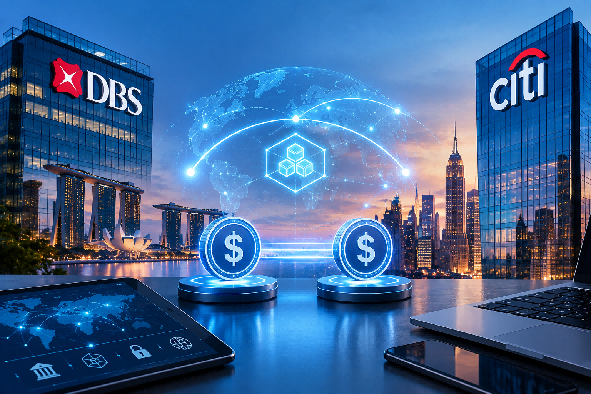
  • DBS and Citi Complete Cross-Border Tokenised Deposit Payment Using Blockchain

    DBS and Citi Complete Cross-Border Tokenised Deposit Payment Using Blockchain

    10th September 2026

    By Shubhii Verma

    DBS and Citi have completed a live cross-border US dollar payment using tokenised deposits, demonstrating how blockchain infrastructure could enable international transactions beyond traditional banking hours.

    DBS and Citi Test Live Blockchain-Based Cross-Border Payment

    The transaction, executed on September 5 between Singapore and Citi’s New York office, was completed within minutes through the SWIFT Digital Ledger, according to the two banks. The trial is part of a proof-of-concept running from July through December and aims to explore faster, always-on cross-border payments.

    Traditional international settlements can take as long as two business days because of time-zone differences, weekends and banking-hour restrictions. The latest test seeks to address those limitations by allowing payment commitments to move through shared ledger infrastructure using tokenised deposits.

    The initiative comes as financial institutions seek more efficient liquidity-management solutions for digital businesses operating around the clock, including e-commerce and digital services. Cross-border payment volumes in Asia are projected to nearly double to US$24 trillion by 2033, compared with US$13.5 trillion in 2025.

    What Is the SWIFT Digital Ledger?

    The SWIFT Digital Ledger uses shared blockchain infrastructure to support instant payment commitments through tokenised deposits.

    Citi has also been expanding blockchain-based capabilities. Its Citi Token Services platform processes around US$1 billion in transactions, while its 24/7 US dollar clearing solution serves more than 300 global banking clients.

    Citi executive Mridula Iyer said the trial extends the bank’s strategy of connecting traditional cash-management and securities capabilities with emerging tokenised networks and assets. For corporate customers, transferring bank-issued digital money across borders could provide greater payment certainty and faster access to liquidity.

    DBS has been developing its blockchain capabilities to modernise banking infrastructure and support digital asset innovation across financial services. The Singapore-based bank launched its blockchain-powered banking suite, including treasury tokens, in 2024 to support instantaneous value transfers. It is also the only Asian-headquartered bank among SWIFT’s 12-member core design group for its digital ledger architecture.

    DBS said it has processed about S$10 billion in tokenised payments cumulatively over the past two years. The lender expects investment in tokenised finance to catch up with, or potentially exceed, spending on traditional payments and custody within the next two to three years.

    UOB is scheduled to conduct a separate US dollar transaction with Citi later in September, adding another live test to the pilot. Together, these initiatives indicate growing institutional interest in blockchain infrastructure as banks seek to modernise cross-border settlement and build financial systems capable of operating continuously across major financial markets worldwide today.